
Hoisting Equipment
Hoisting Equipment
Chain hoists, lever hoists, beam clamps, trolleys and plate clamps. Proof-tested and certified per unit.
Products
Hoisting Equipment we supply
Full specifications are public. Pricing displays after sign-in on an approved account.
Chain Hoists
Hand chain hoists from 1 to 5 tonne, proof-tested, serial marked and supplied with certificates.
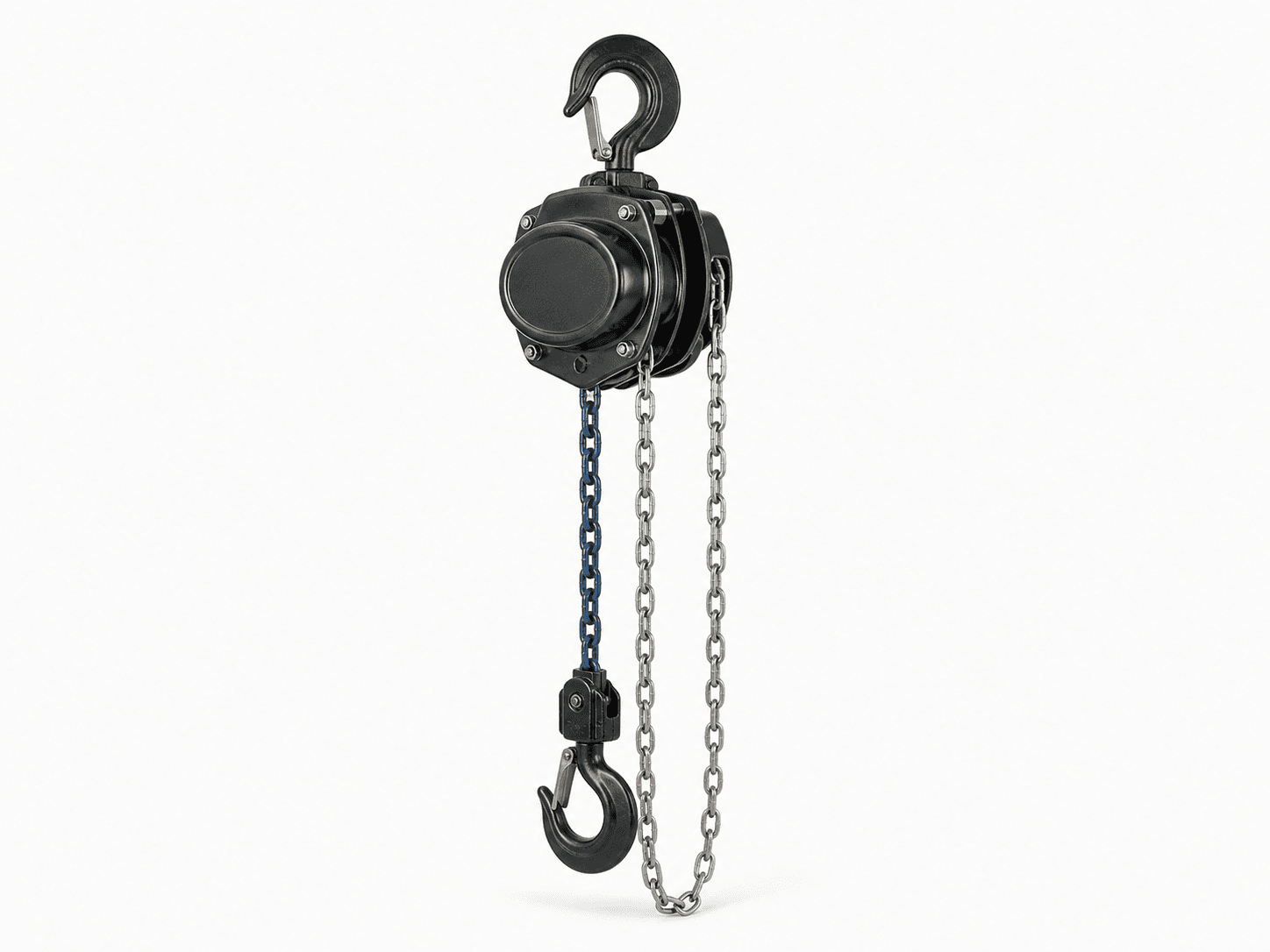
Manual Chain Hoist, 1 Tonne
1 tonne hand chain hoist, proof-tested, serial marked and certified.
Heavy Duty Manual Chain Hoist, 1 Tonne
1 tonne hand chain hoist in the heavy duty build, Grade 100 load chain and upgraded brake friction, proof-tested, serial marked and certified.
Manual Chain Hoist, 2 Tonne
2 tonne hand chain hoist, proof-tested, serial marked and certified.
Heavy Duty Manual Chain Hoist, 2 Tonne
2 tonne hand chain hoist in the heavy duty build, Grade 100 load chain and upgraded brake friction, proof-tested, serial marked and certified.
Lever Hoists
Ratchet lever hoists from 0.75 to 6 tonne for pulling, tensioning and positioning, certified per unit.
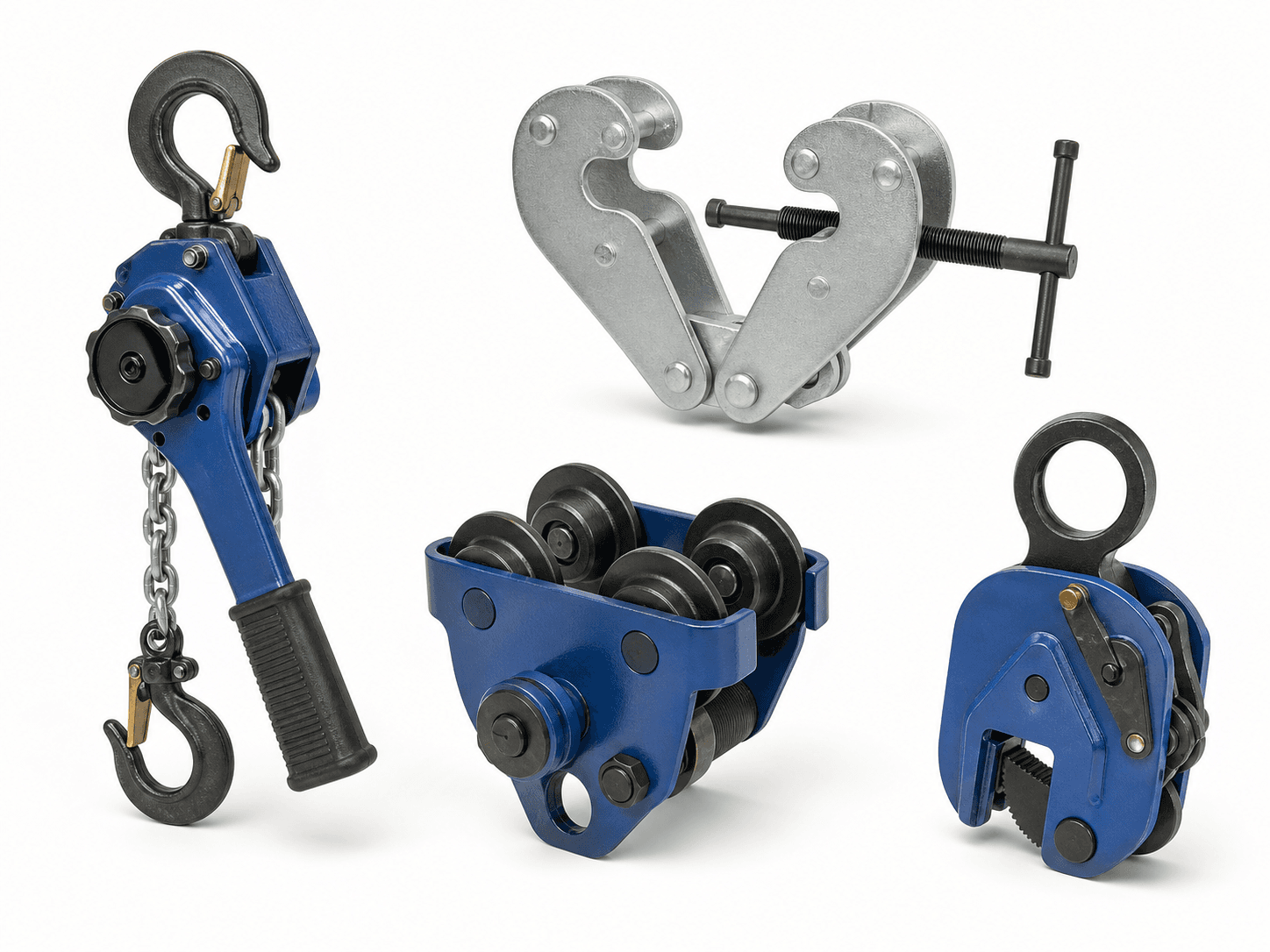
Beam Clamps & Trolleys
Adjustable beam clamps and push or geared trolleys from 1 to 5 tonne, marked and certified.
Plate Clamps
Vertical and horizontal plate lifting clamps from 1 to 5 tonne, proof-tested and certified per unit.
Hoisting equipment you can put on an inspection schedule
A hoist is only as good as its paperwork on the day someone asks for it. Every unit we supply is proof-tested before shipment, marked with its rated capacity and a serial number, and shipped with a test certificate and an inspection manual. That is what turns a hoist from an unknown hanging on a beam into an inspectable asset.
What we supply
- Manual chain hoists from 1 to 5 tonne, with 3 m standard lift and longer lifts to order
- Lever hoists from 0.75 to 6 tonne for pulling, tensioning and positioning
- Beam clamps and trolleys from 1 to 5 tonne, adjustable to your beam flange
- Plate lifting clamps, vertical and horizontal, specified against your plate thicknesses
Heavy duty, where the duty justifies it
The difference between occasional maintenance use and daily production service is entirely a question of what wears out. Heavy duty builds change those components: Grade 100 alloy load chain in place of Grade 80, heavier hook forgings with self-locking latches at both ends, sealed bearings, upgraded brake friction, and corrosion-resistant finishes for outdoor and marine service.
An HD hoist is certified to its rated capacity exactly like the standard unit. The upgrade buys service life and reliability, not a higher number on the same hardware.
Specify against the beam and the plate
Two details cause most of the wrong equipment arriving on site:
Beam clamps and trolleys need flange width, flange thickness and beam profile. A clamp forced onto the wrong flange carries its load on a fraction of the intended contact area.
Plate clamps need the plate thicknesses you actually handle. Jaw opening range governs whether a clamp grips as designed, independently of how far inside its rated load it is being used.
Inspection is where this category earns its keep
Hoists are inspected on a schedule, and the record needs to tie back to a serial number and an original certificate. Our units are supplied with both. If a certificate is lost, we reissue it from the serial number.
Documentation is prepared to support the marking, rating and inspection obligations under Ontario's O. Reg. 213/91 and the applicable ASME B30.16 and B30.21 requirements. Inspection, training and safe use remain the employer's responsibility through a competent person.
Frequently asked questions
What is different about a heavy duty hoist?
Grade 100 alloy load chain in place of Grade 80, heavier hook forgings with self-locking latches at both ends, sealed bearings, upgraded brake friction and corrosion-resistant finishes. It is rated and certified to the same capacity; the upgrade buys service life under high cycle duty.
What do you need to quote a beam clamp or trolley?
Flange width, flange thickness and beam profile, plus the capacity required. Those three dimensions decide which unit fits, and a clamp on the wrong flange does not load as designed.
How do I choose a plate clamp?
By jaw opening range against the plate thicknesses you actually handle, then by capacity. A clamp used outside its jaw range will not grip as designed regardless of how light the load is.
Do hoists come with certificates?
Yes. Each unit is proof-tested, marked with rated capacity and serial number, and shipped with a test certificate, load chain material certification and an inspection manual. Lost certificates are reissued from the serial number.
Can you supply longer lifts than standard?
Yes. Custom lift heights are supplied with a matched chain container. Tell us the headroom and the lift required and we will quote it.